
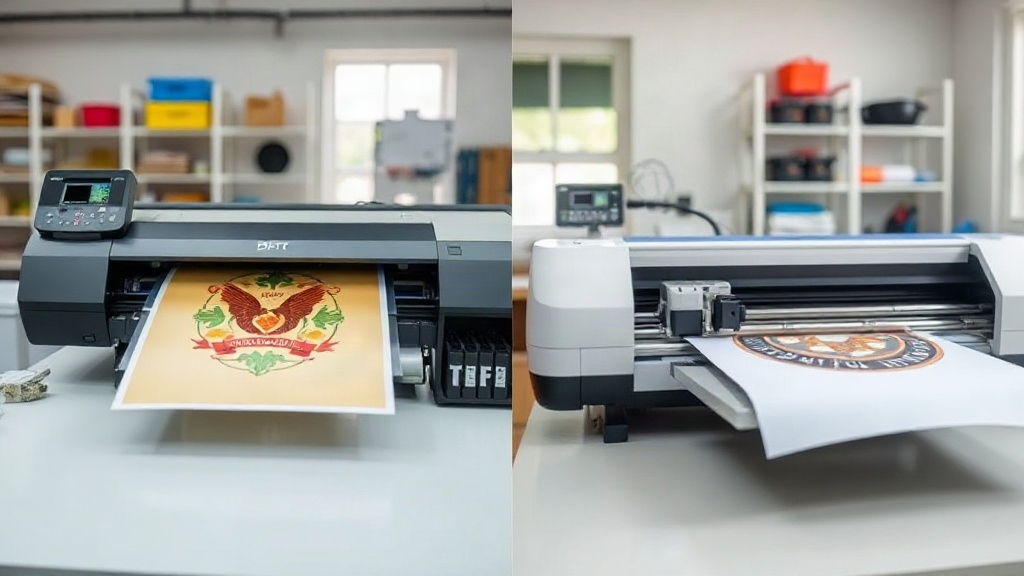
When you're printing custom t-shirts for a local sports team or running an online apparel shop, the heat transfer method you choose can make or break your workflow. Two popular options are DTF (Direct to Film) and vinyl. Both use a heat press, but they differ in preparation, materials, and the final feel. In this article, we'll break down the key differences so you can decide which method fits your production needs.
What Is DTF Printing?
DTF printing involves printing your design onto a special film using a DTF printer and water-based inks. After printing, you apply a hot-melt powder to the wet ink, which acts as an adhesive. Once the powder is cured, the film can be stored or directly pressed onto fabric. The result is a vibrant, durable transfer that works on almost any fabric, including cotton, polyester, and blends.
How the DTF Process Works
The DTF process starts with a digital design. You print it onto a PET film using a DTF printer equipped with CMYK and white inks. The white ink is crucial for opacity on dark garments. After printing, you sprinkle the adhesive powder over the wet ink, shake off the excess, and cure the film in an oven or with a heat press. Finally, you press the film onto the garment at around 160°C for 10-15 seconds, peel the film, and you're done.
What Is Vinyl Heat Transfer?
Vinyl heat transfer, also known as heat transfer vinyl (HTV), is a method where you cut your design from a colored vinyl sheet using a cutting plotter. Then you weed out the excess vinyl, place it on the garment, and press it with a heat press. HTV comes in various types: standard, stretch, flock, glitter, and more. It's a staple for small shops because of its low initial cost and simplicity.
How Vinyl Heat Transfer Works
With vinyl, you start by creating a vector design and cutting it on a plotter. After cutting, you weed out the unwanted parts, leaving only the design on a carrier sheet. Then you position it on the garment and press at about 150-160°C for 10-20 seconds, depending on the vinyl type. After pressing, you peel the carrier sheet, either hot or cold, following the manufacturer's instructions.
Comparing DTF and Vinyl: Key Factors
Both methods have strengths and weaknesses. Let's compare them across several factors that matter for production.
Design Complexity
DTF excels with complex, multi-color designs, gradients, and photographic images. Since it's a digital print, there's no limit to the number of colors. Vinyl, on the other hand, requires layering for multi-color designs, which can be time-consuming and may result in a thick feel. For intricate details, DTF is generally superior.
Fabric Compatibility
DTF works on a wide range of fabrics, including cotton, polyester, nylon, and blends. It adheres well to both light and dark garments. Vinyl also works on many fabrics, but some types may not adhere well to certain materials like nylon or heavily textured fabrics. For stretchy fabrics, you need special stretch vinyl, which can be more expensive.
Durability and Washability
Properly applied DTF transfers are highly durable, withstanding 50+ washes without significant fading or cracking. Vinyl can also last long, but it may peel or crack over time, especially if the design has fine details or if the garment is stretched frequently. DTF tends to have a softer hand feel after washing, while vinyl can feel stiff, particularly on large designs.
Cost Considerations
For short runs, vinyl can be more cost-effective because the materials are cheaper and you only use what you need. However, for larger orders or complex designs, DTF becomes more economical because there's no weeding or layering, and you can gang multiple designs on one film. The initial investment for a DTF printer is higher, but it pays off if you do a lot of full-color work.
Production Speed and Workflow
DTF allows you to print multiple designs at once, powder and cure them, and then press as needed. This batching can speed up production for repetitive orders. Vinyl requires cutting and weeding for each design, which can be slow for complex artwork. However, vinyl is faster for simple one-color designs because there's no powdering or curing step.
Environmental and Safety Aspects
DTF uses water-based inks and a powder adhesive. The process is generally considered safe, but you should work in a well-ventilated area and avoid inhaling the powder. Vinyl is a plastic material, and some types contain PVC, which can release harmful fumes if overheated. Always follow safety guidelines and use a heat press in a ventilated space.
When to Choose DTF
Choose DTF if you frequently print full-color, photographic, or gradient designs. It's ideal for dark garments and fabrics that are hard to print on with other methods. If you want to offer a soft, flexible print that withstands washing, DTF is a strong contender. Also, if you want to streamline your workflow by printing and pressing on demand, DTF offers that flexibility.
When to Choose Vinyl
Vinyl is a great choice for simple, one-color designs, names, numbers, and logos. It's perfect for small batches where cost is a concern and the design is straightforward. If you already have a cutting plotter and want to avoid the investment in a DTF printer, vinyl is a practical option. It's also excellent for personalizing items like bags, hats, and shoes, where a thin, precise cut is needed.
Can You Use Both Methods?
Absolutely. Many shops offer both DTF and vinyl to cover a wider range of customer needs. For example, you might use vinyl for simple team numbers and DTF for the team logo with gradients. Having both capabilities makes your business more versatile.
Frequently Asked Questions
Is DTF better than vinyl for dark shirts?
Yes, DTF is generally better for dark shirts because it uses a white ink layer that makes colors pop without needing a white underbase. Vinyl on dark shirts requires either a white vinyl layer or a colored vinyl that contrasts with the shirt, which can limit design options.
How long does DTF last compared to vinyl?
With proper application and care, DTF transfers can last as long as the garment, often 50+ washes. Vinyl can also last long but may start to peel or crack after 20-30 washes, especially if not applied correctly or if the garment is washed inside out.
Can I use DTF on polyester?
Yes, DTF works well on polyester and polyester blends. It's actually one of the best methods for polyester because it doesn't require a special type of vinyl and can be pressed at lower temperatures to avoid scorching.
Do I need a special printer for DTF?
Yes, you need a DTF printer that uses DTF inks and has a white ink channel. You also need a powder shaker and a curing oven or heat press. It's an investment, but it opens up a lot of possibilities.
Which method is more eco-friendly?
DTF uses water-based inks, which are generally more environmentally friendly than PVC vinyl. However, the film and powder still have environmental impact. Vinyl produces waste from cutting and weeding, and PVC vinyl can release harmful fumes. Both methods require responsible disposal practices.
Final Thoughts
Deciding between DTF and vinyl depends on your specific needs. If you want versatility, vibrant colors, and the ability to print complex designs on various fabrics, DTF is a powerful choice. If you prefer a low-cost, straightforward method for simple designs, vinyl might be your go-to. Many successful shops use both. Evaluate your typical orders, budget, and workflow to make the best decision for your business.